










InchDairnie Distillery goes to 'the dark side'
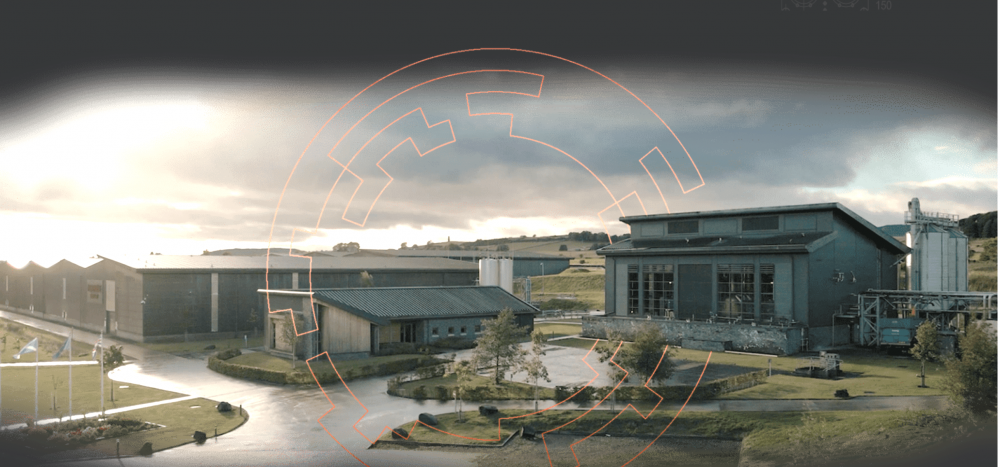
Fife-based InchDairnie Distillery has become the first to distil a mash made from a majority of Dark Kilned Malted Spring Barley.
Dark Kilned Barley is kilned/dried at a higher temperature than standard malted barley leaving the grains dark (as opposed to a grain coloured norm). This gives a much darker colour to the wort (the sugar water extracted from the barley) but most importantly, a vastly different flavour, explains the distiller.
Breaking the norm
The Dark Kilned Barley is normally only used in brewing of dark beers and when used – only in smaller quantities, such as 15 – 20% of the total mash. InchDairnie Distillery however has dialled up the proportion of Dark Kilned Barley (DKB) to 80% with 20% standard malted barley making up the remainder of the mash bill. All malted barley has a yield prediction based on what a distillery mash tun can get out of the grain. This is measured in litres of alcohol per ton and is normally around 410. But when malted barley is dark roasted it can damage enzymes that convert starch to sugar resulting in a yield forecast of only 292 litres of alcohol per ton – and that is if a mash man would even contemplate filling the mash tun with Dark Kilned Barley (DKB) malt. Due to the viscosity DKB would clog up the system. But… InchDairnie Distillery does not have a standard mash tun. Ingeniously the Fife distillery instead has a mash filter fed by hammer mill (as opposed to industry standard roller mill) and this enables the distillery to process types of grain not processable elsewhere, while getting both a higher than standard yield and extracting more flavour.
Excite our consumers – goal
“Every day is about the flavour for us – with the ultimate goal of exciting our consumer’s palate” explains Distillery Manager Scott Sneddon and continues “…but this Dark Kilned Barley has left us stunned. We researched it and expected more flavour, but this is exceptional malt with extra layers. I can’t wait to taste the mature version of it”.
In fact, the yield was not as low as 292 litres per ton, but instead an unusual high 375 litres per ton and with, apparently, a flavour extraordinaire.
Scott Sneddon explains further “Dark Kilned Barley malt is produced much like all other malts other than how it is kilned. The main difference in the kilning system is that it is carried out at higher temperatures and higher humidity. Normally the kilning temperatures are kept low so as not to damage the enzymes in the malt and the humidity is kept low to help with the drying. When producing Dark Kilned Barley Malt, it’s all about the Maillard reaction, a very common and complex chemical reaction found when cooking food. This is where amino acid and sugar react and give the brown colour to food, meat and bread crust being common examples. The amino acids coming from the proteins in the barley. The Maillard reaction is not the same as caramelisation of sugar.”
The flavour of the new make
The Maillard reaction in malted barley gives a lot of biscuit, bread, malt, roast, and savoury flavours to beer. Just because these flavours are present in the beer this does not automatically mean they will boil over into the spirit when distilled so a gentle distillation is needed.
The analysis of the spirit against our benchmark Strathenry spirit shows an increase in total esters, amyl and big jump in the Furfural. The Furfural giving the malt, biscuit and bread flavours.
The new make spirit has now been filled at our usual filling strength of 63.5% alc. and filled in the second fill ex bourbons. These casks will not overpower the new make flavours so it should be ready for bottling in 6 to 8 years and bottled as part of our PrinLaws collection.